All of our actions in school are informed by our four core values
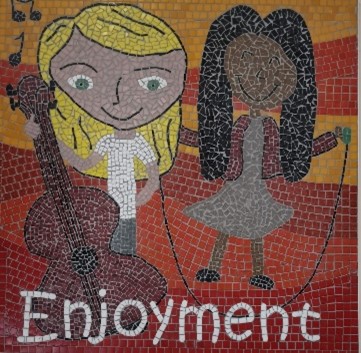
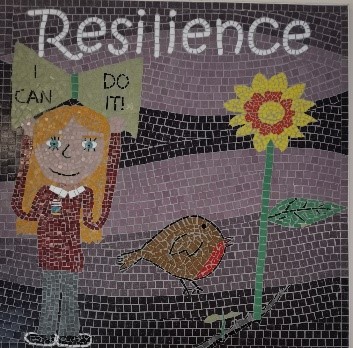
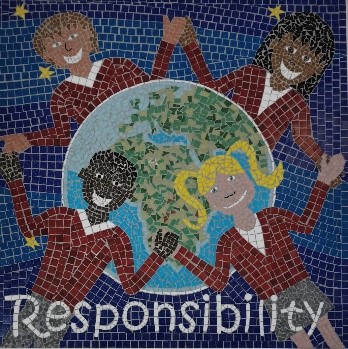
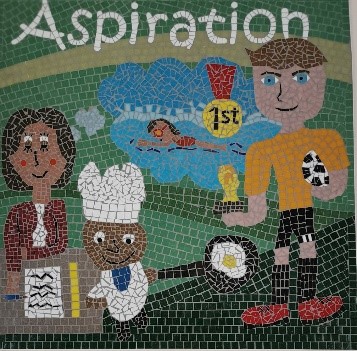
Our curriculum is planned and delivered with these values as guiding principles.
The school community has worked together to develop a curriculum which is rich and diverse but also balanced and relevant. It provides significant opportunity for children to apply and express their knowledge and understanding across a variety of subject areas. We believe that providing a wide range of learning experiences is undoubtedly the best way to develop well-rounded, happy children who are able to make connections, develop their long-term memory and face the future with confidence.
Our Approach
The curriculum at The Globe incorporates the 2014 National Curriculum (NC). However, the school also recognises that this is only one element in the education of children; as a school we have a desire to range beyond the NC specifications. The school is aware that the NC provides an outline of core knowledge around which teachers are expected to develop exciting and stimulating lessons as part of a wide, enriching school curriculum. We believe that children learn best when they are engaged and motivated so we are committed to providing a creative curriculum which meets the needs of every individual. We believe in providing challenge and have high expectations for all our learners. We aim to create an environment where children’s efforts are valued and where everyone has a chance to shine.
Our Aims
- To nurture a life-long passion for learning
- To ensure everyone reaches their full potential
- To encourage creative, independent thinking
- To develop children’s skills, knowledge and understanding of a wide range of concepts
- To provide stability and a safe environment to learn in
- To increase self-esteem and build resilience
- To promote children’s mental health and well-being
- To develop children’s capacities to work independently and collaboratively
- To develop a sense of community and citizenship
- To enable children to make choices about their learning
- To take account of children’s interests and fascinations
As far as possible, literacy work is integrated with the theme of each year group’s termly topic so that there is a real purpose for writing. We ensure that genre coverage is broad and balanced and, each half term, children have the opportunity to write to entertain, persuade and inform. Pupils learn writing skills through carefully sequenced lessons which they then apply more independently as they progress through the school. On-going assessments (often framed around an ‘Independent Write’) allows staff to identify next steps in pupils’ learning. Children’s writing is celebrated and displayed throughout the school.
Reading is introduced as a source of pleasure from the outset when pupils join us. In EYFS and KS1 (and for those that require it, in Year 3) Read Write Inc. phonics is taught daily and assessments help match each pupil’s book band with their phonic phase. In this way, and with extra intervention provided for those that need it, children of all abilities are supported to become independent readers at the earliest opportunity. Each child’s reading continues to be assessed so that age-appropriate books and a path of progression can be quickly identified. From Year 2 upwards the children follow Accelerated Reader programme which is used to identify each child’s individual ‘zone of proximal development’ (ZPD). A large area of our school library is dedicated to library books that are clearly labelled so that the children can choose a book within their range. The combination of 1:1 paired reading, guided reading and whole class texts provides our pupils with the decoding and comprehension skills necessary for them to confidently access and enjoy books of their own choosing.
Maths is taught daily across the school from Reception onwards. Sequences of lessons are planned based on the ‘small steps’ set out in the White Rose Maths scheme of learning. This encourages children to focus on key mathematical concepts over a ‘block’ of time with the aim of embedding a fundamental understanding (or ‘mastery’) of these concepts before progressing on to the next unit of work. At The Globe we are aware that all children must move through the concrete, pictorial and abstract stages in their learning. In doing so, they will be able to become fluent mathematicians. We are also aware that in any particular year group, children should be enabled to access their learning outcome through any one of these different stages. Our teachers provide the necessary support and scaffolding including access to ‘practical’ concrete resources throughout EYFS, KS1 and KS2.
Central to our intent is to ensure that children become fluent in both mental and written methods of calculation. In particular, we aim for children to develop an automaticity in their recall of key facts (from subitising in EYFS, through number bonds in KS1 and multiplication and division fact families in KS2) in order to avoid working memory overload when tackling both reasoning and problem solving tasks.
The intent of teaching maths at The Globe is also based on the understanding that in order for pupils to master the taught content, multiple opportunities for intelligent practice (including both conceptual and procedural variation), reasoning and problem solving are provided in daily maths lessons for children to engage with. We also believe that the development of higher level thinking skills, through deeper, open-ended problems can enable rapid-grasping pupils to develop mastery with greater depth.
At The Globe we recognise the importance of Science in everyday life. Learning in Science prioritises the increasing of children’s knowledge and understanding of the world. Throughout each topic area, we aim to evoke an enthusiasm and enjoyment for scientific learning and discovery, with the desire to create independent learners who are eager to explore scientific questions. Skills are developed through a process of enquiry with the aim to develop the natural curiosity of our children and to encourage respect for living organisms and the environment.
In our weekly Science lessons, from EYFS through both KS1 and KS2, children are given opportunities to develop scientific knowledge and understanding of concepts, answering scientific questions about the world around them through different types of enquiries ranging from simple observations to more complicated investigations. Children are encouraged to develop greater independence in planning and carrying out these investigations as they move through the school but we ensure that appropriate scaffolding is available for those children who require it. We also support our SEND children by pre-teaching subject specific vocabulary and ensuring that a suitable range of equipment and methods of recording are made available and adapted if required. Finally, children are taught to use a range of methods to communicate their scientific findings including written explanations, diagrams, graphs and charts. These later methods allow children to apply their mathematical skills, particularly in the areas of measure and data handling.
At The Globe Primary, long-term plans are reviewed annually so that our curriculum offer remains up to date and relevant.
Teaching teams collaborate to produce shorter-term plans that offer engaging, differentiated activities for their year groups. This ensures that all of our children are able to access the curriculum and reach their full potential. Planning in this way also gives us the opportunity to respond to the needs and interests of our children.
History and Geography are closely linked to our diverse range of termly themed topics. The core knowledge that each pupil is expected to acquire is made explicit through the use of Knowledge Organisers. Underpinning this knowledge is a clear sequence of lessons that enables a progression of history and geography skills; pupils are then able to deepen their understanding and apply new learning as they move through the Key Stages. Learning happens in different ways to increase engagement and build skills (see ‘Experience’ days, below). Pupils present their learning through a range of learning outcomes, including topic workbooks, diaries, presentations and role play. When possible, school trips are designed to further pupils’ learning and give them the opportunity to explore and experience settings outside the classroom. Pupils’ attainment and progress is assessed for each foundation subject and termly reports to parents indicate areas of the wider curriculum in which pupils excel or show a particular interest.
PE lessons include pupils of all abilities and often involve playing skills-based games and activities. We nurture talent and competitiveness too and The Globe consistently enjoys success at various sports within our locality. These include regular competitive activities against other schools including both football and netball matches. Children at The Globe also have the opportunity to compete in countywide/regional events in other sports including cross-country and athletics. Our teams draw upon a diverse range of pupils and abilities. For example, we take vulnerable pupils to SEND sporting events to boost their confidence and enjoyment of sport and other physical activity. Throughout the school year our teachers benefit from being supported by specialist ‘Premium sport’ staff who continue to promote their professional development in this key curriculum area. Premium sport staff also provide children with opportunities to participate in a variety of activities during playtimes and lunchtimes. Our swimming pool continues to be enjoyed by all pupils, providing specialist swimming tuition throughout the school year. As of 2022 we are also planning an annual swimming gala which will provide an opportunity for parents and carers to see their children enjoying both individual and team events.
Music lessons follow a progression of skills as children move up through the school and are based on the ‘KAPOW Primary’ scheme of learning for music. Singing is a particular strength within the school and there are regular opportunities for children to practise and enhance this skill as part of daily KS1 and KS2 assemblies. There are also several different choirs at The Globe and through these, a large number of children are able to perform in a variety of settings. For example, one of our choirs sing at a local nursing home at Christmas time, where they are always greatly appreciated by the residents. Our ‘Glee’ choir have entered local singing competitions including the Worthing music festival. The ‘Young Voices’ choir also perform alongside hundreds of other schools at the annual event at the O2 in London. In addition to this, musicians from organisations such as the Sussex Academy of Music (S.A.M.) often visit and present assemblies to encourage our pupils to learn to play via online tuition classes.
In art lesson at The Globe, children work with a variety of media to create the wonderful art on display throughout the school. They develop skills and practise techniques in a sketch book that they take with them as move through the key stages.
In Design Technology, we encourage children to use their creativity and imagination, to design and make products that solve real and relevant problems within a variety of contexts, considering their own and others’ needs, wants and values. We aim to, wherever possible, link work to other disciplines such as mathematics, science, engineering, computing and art. The children are also given opportunities to reflect upon and evaluate past and present design technology, its uses and its effectiveness and are encouraged to become innovators and risk-takers.
The computing curriculum is delivered by building pupils’ critical thinking and digital literacy skills. Activities cover coding and programming simple algorithms. Computer technology is increasingly being used for a wider variety of creative purposes across the curriculum, as well as learning ‘real life’ skills such as publishing documents on word, creating topic based presentations through powerpoint and writing and sending emails. All pupils continue to learn about e-safety as they move through the school and this ties in closely with our PSHE curriculum.
French is taught across KS1 and KS2 in line with the National Curriculum via the ‘Language Angels’ scheme of work. In EYFS children have the opportunity to join in with simple songs and games, for example, during the register and in singing assemblies. Our RE curriculum is based on the West Sussex Agreed Syllabus for Religious Education and focuses around the six major world religions. It is delivered with the support of ‘Discovery R.E.’ scheme of learning. PSHE is taught in all year groups and the school actively joins in with national campaigns such as Anti-Bullying Week, where children wear odd socks to school to celebrate difference and diversity. We also run a ‘Playtime pals’ system in KS2 where children in each year group are encouraged to actively play with others during break and lunchtime time play. All ‘Playtime pals’ have been provided with specialist training with the aim of ensuring that playtimes are an enjoyable, engaging and safe experience for all children.
The Globe has introduced Forest School to our curriculum to provide on-going opportunities for our children to learn skills and develop confidence through hands-on learning experiences in our extensive school grounds. Our Forest School is run a qualified and experienced specialist member of staff. We have a dedicated outdoor area which includes a creative array of environmentally friendly spaces, such as a bee-friendly garden, bug ‘hotels’ and winter dens for hibernating creatures.
Children from Early Years through to Year 6 get the opportunity to attend Forest School in sessions which last half a day and are usually blocked together, over a half term, at several different points in the year. Feedback has been really positive from parents, and our children have really enjoyed the opportunity to explore the outdoors. The sessions are well-planned, with a child-centred approach that encourages independence, creativity and fun.
The aim of the 11 before 11 scheme is to widen children’s life experiences, helping to boost their ambition and expand their own ideas about what they can achieve. Examples include:
- ‘Making something amazing’ - every child has been recorded as part of a class choir and recorded on a school CD
- ‘Breaking a record’ - every child has taken part in a ‘big make’ which broke the R2 Academy Trust record for the number of Christmas craft objects made in a single day.
- ‘Climbing a mountain’ - children in Year 3 participate in a local outdoor activity as part of their ‘Hiking Heros’ topic
- ‘Camping under the stars’ – children in Y1/2 take part in an indoor camping experience while children in Y6 spend three days and nights on a forest based residential trip ran by the Bushcraft Company.
Every term we offer a range of events across the school to enrich the curriculum and enhance the enjoyment of learning. These often include visits and visitors, bringing outside expertise and alternative settings to promote learning. However, throughout all of our topics, it is chiefly the imagination and preparation from our teachers that ensure pupils are ‘hooked’ from the outset. As much as possible, each topic will include an ‘experience day’, a topic-themed set up or hook that engages the children and invests them into their learning from the start. Here are some examples of what our pupils can expect:
Reception - a dedicated “Emergency Services” week; ‘Once upon a time’ dress ball day and ball; every Spring term children have the opportunity to see duck eggs hatch and watch the ducklings grow in their classroom.
Year 1 and 2 – a ‘train ride’ experience day, nocturnal animals day, indoor campfire experience
Year 3 – ‘Bear Feast’ Day (linked to Stone/Iron Age topic and Forest School activities), an Egyptian Day, ‘Hiking heroes’ activity
Year 4 - ‘Fishbourne Roman Palace’ Experience, ‘Fly to Spain’ day
Year 5 - An end of topic ‘Tudor banquet’ experience with feasting and dancing, an astronaut training day including ‘weightless’ tasks in our swimming pool
Year 6 – A dedicated ‘become a first-aid expert’ week, an opportunity to take part in a week of ‘Reach2 Olympic’ events
The diversity of our curriculum is reflected in our approach to home learning. Each term, pupils are provided with a Home Learning choice grid which offers a choice of homework tasks across the range of foundation subjects. The termly Home Learning choice grids have resulted in some hugely creative outcomes which are proudly on display in our school.
These tasks are supplemented with weekly ‘teacher set’ English or maths activities which are accessed via the ‘Google classroom’ remote learning platform. These tasks promote parental engagement with their child’s learning, providing an insight into both ‘what’ and ‘how’ children learn in class. They also provide a weekly opportunity for children to practise and consolidate their prior learning.
At The Globe the ‘Marvellous Me’ app is used by teachers to communicate praise, achievements and messages to parents on a very regular basis. In addition to this app, we use a variety of other means including an updated school website page, termly reports and associated parents’ consultations evenings to ensure that parents are given personalised and ‘real time’ feedback about what their children are achieving at school. The Globe also posts on social media (particularly Facebook and Instagram) in order to keep parents informed of a wide range of special events that happen at our school. We also regularly use these platforms to share examples of learning outcomes and the exceptionally high quality children’s work that we are proud to display in our corridors.